

Faculty Directory
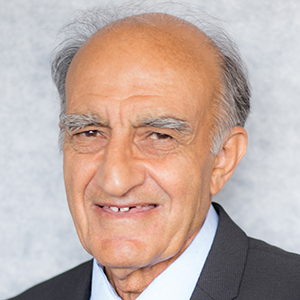
Hossein Kazemi
Professor
Chesebro' Distinguished Chair in Petroleum Engineering
Co-Director, Marathon Center of Excellence for Reservoir Studies
Contact Information
Room 217 Marquez Hall
- Minerals and Subsurface Energy
Biography
Our understanding of reservoir performance is increased through the study of fluid flow principles, a clear description of reservoir geology, and the judicious use of appropriate reservoir models and simulators. This allows us to evaluate “what if” production alternatives to produce the reservoir most efficiently and economically.
The detailed reservoir heterogeneity must be carefully accounted in recovery calculations. Laboratory experiments are generally conducted at too small a scale compared to the reservoir scale, but we must nevertheless be able to translate laboratory results to field-scale calculations.
Another major problem revolves around the inefficient contact of the reservoir fluid with the displacing fluid because of channeling and frontal instabilities known as fingering. We must be able to predict accurately fluid channeling and fingering and develop techniques to alleviate such problems. The recognition and prediction of flow channeling can be accomplished from the analysis of the reservoir rock, fluid properties, water/oil and gas/oil ratios, tracer signature, and pressure-transient response.
Practical reservoir simulators are based on finite-difference and finite-element discretization schemes. I do not anticipate any major changes in these numerical approaches in the foreseeable future. The research in this area must include judicious and efficient use of local mesh refinement to account for reservoir heterogeneities (channels, fractures, vugs, layers, and discontinuities).
Furthermore, we must learn to improve the mathematical implementation of the correct physics in such simulators. Finally, robust and efficient mathematical algorithms (e.g., equation solvers, vapor/Iiquid equilibrium calculations, relative permeability hysteresis tracking) must be developed in anticipation of routinely using very large reservoir models with more than 1,000,000 nodes.
I like to do research on various aspects of reservoir engineering (especially with a strong emphasis on the physics of flow in porous media), reservoir description, and mathematical modeling (both analytical and numerical). I want to work with students who are perceptive, have strong mathematical background, work hard, have self-initiative, and can transfer scientific ideas to practical applications.
Education
- B.S., Ph.D., University of Texas/Austin
Research
Petroleum reservoir simulation, improved and enhanced oil recovery, transient testing in wells, and geomechanics simulation
Additional Information
Research Pillars
Energy | Frontiers
Research Focus Areas
Advanced Energy Systems & Integration | Computing for Innovation | Energy in Global Context | Harnessing Renewable Energy Sources | Optimizing Fossil Fuels
Research Keywords
Carbon Capture & Storage | Energy Storage | Energy-Water Nexus | Geothermal Exploration & Energy Technologies | Low- and Zero-Carbon Energy | Modeling & Simulation | Renewable & Alternative Energy Integration