

/filters:format(webp)/prod01/mines/media/minesedu/admin-media/program-pages-and-finder/graduate-/0646_CSM-2022.10_3443.jpg)
Geochemistry (Thesis)
Master of Science
Delivery Options
 Campus
Fall 2026 Deadline
Priority: December 15th
Domestic: July 1st
International: March 1st
Department
Program Overview
Leverage chemistry to explore and protect the systems people depend on—clean water, safe food, critical minerals and materials and a changing climate – with a Master of Science in Geochemistry (Thesis) at Colorado School of Mines.
Geochemists work where Earth processes meet human needs, turning field samples and laboratory data into decisions that matter. You will combine traditional geochemical field and laboratory methods with modern computational, analytical and data-driven tools used by practicing geochemists in industry and government.
As a geochemist, you will tackle complex real-world problems that directly affect environmental health, resource security and infrastructure resilience while building in-demand technical skills that support long-term career stability and advancement. With a Master of Science in Geochemistry (Thesis) from Mines, you will be prepared to lead technically complex projects that require chemical insight, regulatory awareness and defensible data analysis, leveraging modern computational tools to deliver actionable solutions.
Program Detail
The Master in Science in Geochemistry (Thesis) builds on a rigorous foundation of thermodynamics and chemical kinetics, bridging the gap between geological sampling and quantitative modeling. By integrating isotope geochemistry with environmental mineralogy, the program develops the technical precision needed to address global resource challenges. Specialized tracks include:
- Geochemistry: Focus on the chemical evolution of the Earth’s crust and mantle, geochemistry of energy and mineral resources, chemical mineralogy and more.
- Environmental geochemistry: Focus on the coupled chemical and biological processes of the Earth’s biosphere and the changes caused by human activities
You will master reactive transport modeling and analytical instrumentation, gaining the ability to predict contaminant migration and characterize mineral deposits with molecular-level accuracy. Graduates develop the technical expertise and data-driven decision-making skills required to lead multidisciplinary teams in the mining, environmental consulting, and energy sectors, ensuring sustainable resource management.
In the Master in Science in Geochemistry (Thesis), you will complete 36 credits of graduate-level coursework. Students will also complete a thesis based on original research they conduct and give a public seminar on their research.
Faculty Expertise
Meet three faculty experts who bring decades of industry experience in environmental consulting and mineral exploration to help you manage earth systems resources and environmental challenges.
/filters:format(webp)/prod01/mines/media/minesedu/faculty-headshots/james-ranville.jpg)
/filters:format(webp)/prod01/mines/media/minesedu/faculty-headshots/zhaoshan-chang-1.jpg)
/filters:format(webp)/prod01/mines/media/minesedu/faculty-headshots/linda-ann-figueroa.jpg)
Application Requirements
-
Bachelor's degree
-
GRE: Not Required
-
Resume or Curriculum Vitae (CV)
-
Letters of Recommendations (3 letters)
-
Statement of Purpose
-
Transcripts
-
International students please review the English proficiency requirements
Program Curriculum
View Academic CatalogWorld-Class Labs, Centers and Facilities
/filters:format(webp)/0x56:1632x1168/prod01/mines/media/minesedu/admin-media/facilities/Microscopy-Fluid-Inclusion-Lab.jpg)
State-of-the-art analytical capabilities for imaging and analysis of geological materials at the microscopic scale. The laboratory is also equipped with instrumentation that allows the petrographic analysis of fluid inclusions and microthermometric measurements.
/filters:format(webp)/28x0:2572x1734/prod01/mines/media/minesedu/admin-media/facilities/Mineral-Materials-Characterization-Facility.jpg)
Dedicated to mineral and material characterization and analytical application developments, the facility supports and collaborates with students and researchers from Mines, researchers from state or federal research agencies, and offers services to members from the minerals, materials, energy, and environmental industries.
/filters:format(webp)/0x89:2600x1861/prod01/mines/media/minesedu/admin-media/facilities/LA-ICP-Lab.jpg)
Laser Ablation Inductively Coupled Plasma Mass Spectrometry (LA-ICP-MS) allows for rapid, in-situ, trace-element, and isotopic analysis of solid materials.
Career Outlook
Median salary for recent program graduates is $72,000. Learn more about Mines' comprehensive career development resources and this degree's salary potential.
Employers who seek Mines graduates include
Consulting and Environmental Engineering
Firms hiring for aqueous geochemistry, contaminant fate and transport and remediation. Companies such as AECOM, Arcadis, Barr Engineering Co., Brown and Caldwell, CDM Smith, Clean Harbors, Geosyntec Consultants, Golder (now WSP), Haley & Aldrich, Jacobs, Knight Piésold, Pinyon Environmental, SRK Consulting, Stantec,Tetra Tech, TRC Companies, Wood (now WSP)
Energy (Oil, Gas and Geothermal)
Companies hiring for source rock analysis, fluid-rock interaction and reservoir characterization. Companies such as Anadarko (now Occidental), Anschutz Exploration Corporation, Apache Corporation, Baker Hughes, BP Chevron (Major partner for geochemistry research), ConocoPhillips, Devon Energy, EOG Resources, ExxonMobil, Halliburton, Hess Corporation, Occidental (Oxy), Ormat Technologies (Geothermal), Schlumberger (SLB), Shell
Government, Agencies and Research
Agencies hiring for water quality monitoring, nuclear waste management and isotope research.
Organizations such Colorado Department of Public Health and Environment (CDPHE), Lawrence Berkeley National Laboratory (LBNL), Los Alamos National Laboratory (LANL), NASA (Planetary geochemistry and astrobiology), National Laboratory of the Rockies (NLR), Pacific Northwest National Laboratory (PNNL), Scripps Institution of Oceanography, U.S. Environmental Protection Agency (EPA), U.S. Geological Survey (USGS) (Located on the Mines campus; major employer for geochemists)
Mining and Mineral Resources
Companies hiring for exploration geochemistry, tailings management and acid mine drainage mitigation. Companies such as AngloGold Ashanti, Barrick Gold, BHP, Freeport-McMoRan, Kinross Gold, Newmont (Top employer for environmental geochemistry in mining), Rio Tinto, Teck Resources, Vale
/filters:format(webp)/prod01/mines/media/minesedu/admin-media/stock-photos/Engineering-and-Design-Consulting.jpg)
Frequently Asked Questions
What is the value of a graduate degree in geochemistry?
A graduate degree in geochemistry equips you to understand, predict and manage the chemical processes that control Earth and environmental systems. At Mines, geochemistry is taught as an applied, quantitative discipline that connects field observations, laboratory measurements and computational analysis. Graduates leave prepared to interpret complex data, support technical decisions and contribute immediately in professional roles across industry, consulting and government.
What advances are shaping the field of geochemistry?
Geochemistry is evolving rapidly as new tools expand how chemical data are collected, analyzed and applied. Key advances include:
- Reactive transport and geochemical modeling to predict system behavior over time
- High-resolution analytical and isotopic techniques that reveal processes at finer spatial and temporal scales
- Data-driven environmental monitoring using integrated sensor and sampling networks
- Computational integration of field, laboratory and modeling workflows
- Expanded applications to critical materials, water quality and industrial systems
What career options will I have with a degree in geochemistry?
Graduates pursue technical and analytical roles that require chemical insight and quantitative problem-solving, including:
- Geochemist or environmental scientist
- Water quality or remediation specialist
- Resource or mining geochemist
- Environmental consultant
- Geochemical modeler or data analyst
- Laboratory or analytical specialist
What industries hire geochemistry graduates?
Geochemistry graduates are employed wherever understanding chemical behavior in Earth systems is essential, including:
- Environmental and engineering consulting firms
- Energy and resource companies
- Mining and materials industries
- Government agencies and regulatory bodies
- National laboratories and research organizations
What are the current research and applied directions in geochemistry?
Today’s geochemistry work focuses on solving real-world problems using chemical and computational tools. Key areas include:
- Water and soil geochemistry
- Contaminant fate and transformation
- Mineral–fluid interactions
- Geochemical modeling and decision support
- Energy and resource system applications
Featured Alumni
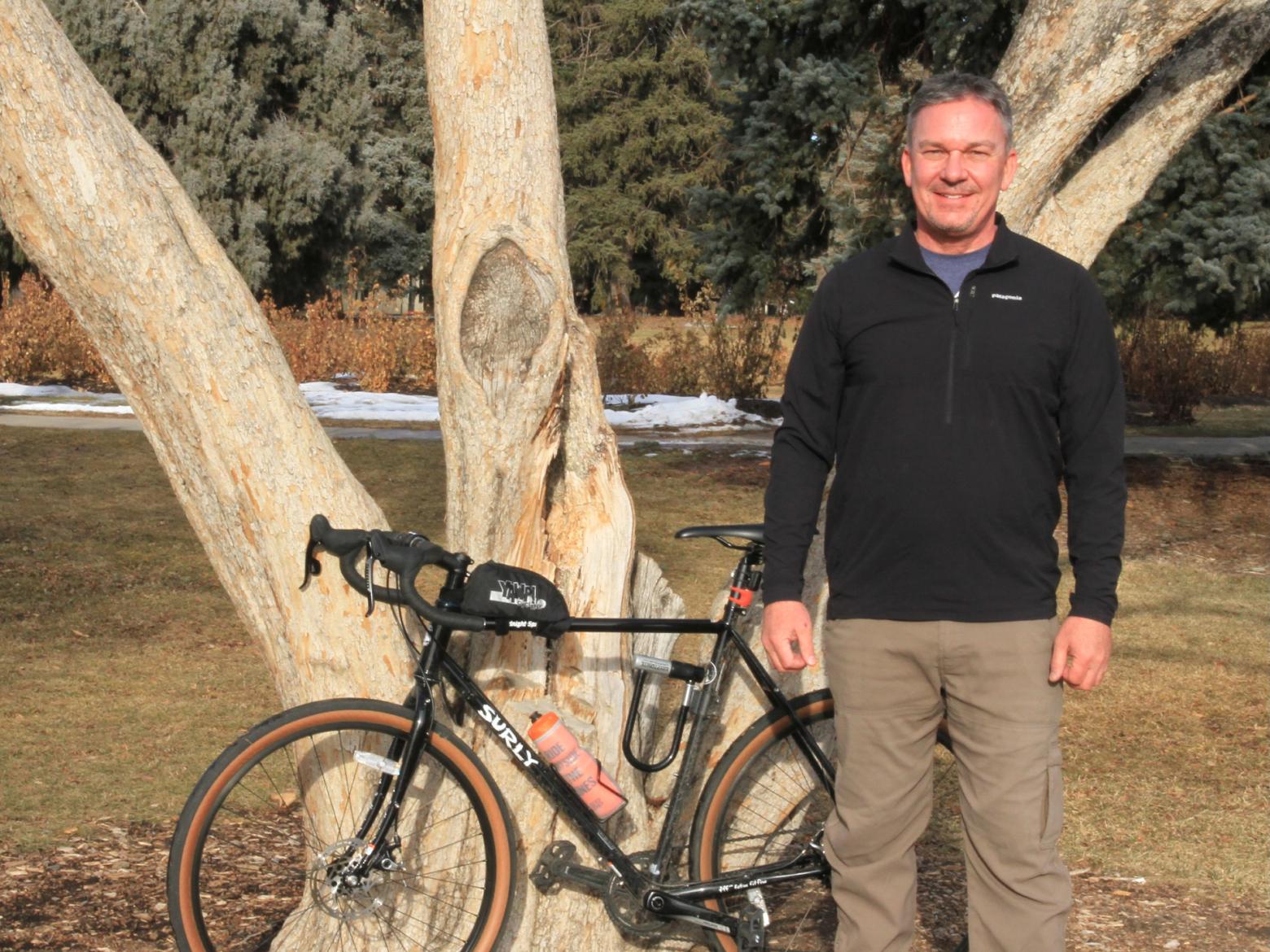

Meet Jeff Gillow PhD ’06
Jeff Gillow pursued graduate education at Mines and has built a career applying geochemistry to environmental challenges across water, mining and industrial systems. Having worked as a geochemist and principal technologist, he now serves as Vice President and Critical Minerals Growth Platform Lead at Arcadis, helping advance more sustainable, responsible resource development.
/filters:format(webp)/prod01/mines/media/minesedu/admin-media/program-pages-and-finder/program-finder-photos-/Analytical-Geochemistry-Grad-MP-NT.jpg)
/filters:format(webp)/prod01/mines/media/minesedu/admin-media/program-pages-and-finder/program-finder-photos-/Environmental-Engineering-Science-Grad-MS-NT.jpg)
/filters:format(webp)/prod01/mines/media/minesedu/admin-media/program-pages-and-finder/program-finder-photos-/Geological-Engineering-Grad-MS-NT.jpg)
Related News
/prod01/mines/media/minesedu/newsroom/images/ColoSchoolOfMines_AdrienneMarshall0478.jpg)
Research & Innovation
Adrienne Marshall wins NSF CAREER Award for study of Western snowpack
/prod01/mines/media/minesedu/newsroom/images/Critical-Minerals-Processing-Researchers.png)
Critical Minerals
Mines metallurgists turning waste into valuable critical minerals
/prod01/mines/media/minesedu/newsroom/images/MME-CAREER-Awards.png)
Research & Innovation