

/filters:format(webp)/prod01/mines/media/minesedu/admin-media/program-pages-and-finder/program-finder-photos-/Environmental-Geochemistry-Grad-MP-NT.jpg)
Environmental Geochemistry (Non-Thesis)
Professional Master’s
Delivery Options
 Campus
Fall 2026 Deadline
Domestic: August 1st
International: March 1st
Department
Program Overview
Environmental geochemistry sits at the intersection of chemistry, geology and environmental science, helping us understand how elements and compounds move through air, water, soil and rock. From tracking contaminants in groundwater to evaluating the impacts of mining, energy production and industrial activity, this field plays a critical role in protecting natural resources and public health. As environmental challenges grow more complex and regulatory expectations increase, there is rising demand for professionals who can interpret chemical data, understand Earth systems and apply that knowledge to real-world decisions.
The Environmental Geochemistry professional master’s non-thesis at Colorado School of Mines is an applied, interdisciplinary graduate program designed for those who want to build that expertise and put it to work. Whether you are advancing directly from an undergraduate degree or returning as a working professional, the program strengthens your technical foundation while focusing on practical skills used in industry, consulting and the public sector. You’ll develop a deep understanding of the chemical processes that govern soil, water and rock systems, including how contaminants are transported, transformed and managed in natural and engineered environments. Coursework emphasizes interpreting field and laboratory data, understanding uncertainty and applying geochemical principles to solve environmental problems. The focus is on real-world application, preparing you to make sound, defensible decisions in professional settings.
Housed within Mines’ broader geochemistry graduate program, this degree draws on an interdisciplinary structure that connects environmental biogeochemistry with related areas such as resource geochemistry and chemical mineralogy. You will engage with concepts ranging from the chemical evolution of Earth systems to the interactions between biological and chemical processes in the environment, particularly as they relate to human impacts.
This non-thesis program is designed for flexibility and accessibility. It can be completed as a standalone graduate degree or as part of a combined bachelor’s and master’s pathway for current Mines undergraduates. Instead of a traditional research requirement, the curriculum is primarily coursework-based, with opportunities to pursue independent study, internships or cooperative experiences that align with your career goals.
The result is a focused, professionally oriented master’s degree that prepares you to contribute immediately in roles that require applied geochemical expertise. Whether you are looking to advance in your current field, transition into environmental work or gain specialized technical skills, this program equips you with the knowledge and experience to navigate complex environmental challenges with confidence.
Program Details
The Environmental Geochemistry professional master’s non-thesis is a coursework-focused program with no thesis requirement. The curriculum is designed to build applied expertise in geochemical processes relevant to environmental systems, including water quality, contaminant behavior, soil and sediment chemistry and mineral interactions. You take advanced courses that integrate chemistry, geology and environmental science, often using case studies, applied projects and team-based assignments. Coursework emphasizes interpreting real data sets, designing sampling strategies and applying geochemical tools to practical problems. A capstone or applied project allows you to synthesize technical knowledge and demonstrate professional-level problem solving.
This degree is not intended as preparation for doctoral research. Instead, it focuses on practical application, professional communication and interdisciplinary collaboration. Courses are shaped by industry needs and taught by faculty with experience across academia, consulting and applied research.
Program Opportunities
Applied field and laboratory experience
You’ll gain hands-on experience through coursework that integrates field sampling, laboratory analysis and data interpretation, reflecting how environmental geochemistry work is done in practice.
Interdisciplinary collaboration
The program draws on expertise across geology, chemistry and engineering, allowing you to work alongside peers from multiple disciplines and mirror professional team environments.
Industry-relevant problem solving
Case studies and applied projects are designed around real environmental challenges faced by consulting firms, agencies and industry partners.
Faculty Expertise
Meet three faculty experts who bring decades of industry experience in environmental consulting and mineral exploration to help you manage earth systems resources and environmental challenges.
/filters:format(webp)/prod01/mines/media/minesedu/faculty-headshots/james-ranville.jpg)
/filters:format(webp)/prod01/mines/media/minesedu/faculty-headshots/zhaoshan-chang-1.jpg)
/filters:format(webp)/prod01/mines/media/minesedu/faculty-headshots/linda-ann-figueroa.jpg)
Application Requirements
-
Bachelor's degree
-
GRE: Not Required
-
Letters of Recommendations (2 letters).
Letters are not required for current Mines students. -
Resume or Curriculum Vitae (CV)
-
Statement of Purpose
-
Transcripts
-
International students please review the English proficiency requirements
Program Curriculum
View Academic CatalogWorld-Class Labs, Centers & Facilities
/filters:format(webp)/0x56:1632x1168/prod01/mines/media/minesedu/admin-media/facilities/Microscopy-Fluid-Inclusion-Lab.jpg)
State-of-the-art analytical capabilities for imaging and analysis of geological materials at the microscopic scale. The laboratory is also equipped with instrumentation that allows the petrographic analysis of fluid inclusions and microthermometric measurements.
/filters:format(webp)/28x0:2572x1734/prod01/mines/media/minesedu/admin-media/facilities/Mineral-Materials-Characterization-Facility.jpg)
Dedicated to mineral and material characterization and analytical application developments, the facility supports and collaborates with students and researchers from Mines, researchers from state or federal research agencies, and offers services to members from the minerals, materials, energy, and environmental industries.
/filters:format(webp)/0x89:2600x1861/prod01/mines/media/minesedu/admin-media/facilities/LA-ICP-Lab.jpg)
Laser Ablation Inductively Coupled Plasma Mass Spectrometry (LA-ICP-MS) allows for rapid, in-situ, trace-element, and isotopic analysis of solid materials.
Career Outlook
Median salary for recent program graduates is $94,000. Learn more about Mines' comprehensive career development resources and this degree's salary potential.
Employers who seek Mines graduates include:
Environmental & Engineering Consultancies
Companies such as AECOM, Arcadis, WSP, Tetra Tech, Jacobs, ERM, Geosyntec Consultants
Government & Public Agency
U.S. Environmental Protection Agency, U.S. Geological Survey, U.S. Department of Energy, State environmental protection agencies, Local water and resource management agencies
Laboratories & Technical Services
Companies such as ALS Geochemistry, Eurofins, Pace Analytical
Energy, Mining & Industrial Firms
Companies such asFreeport-McMoRan, Newmont, Barrick, Chevron, Shell
/filters:format(webp)/prod01/mines/media/minesedu/admin-media/stock-photos/Environmental-Engineering-Consultantancies.jpg)
Frequently Asked Questions
What is the value of a professional master’s non-thesis in environmental geochemistry?
This degree provides applied, job-ready skills without the time commitment of a thesis. You’ll gain practical experience analyzing environmental systems and communicating results, which employers value in consulting, industry and public-sector roles.
What types of problems do environmental geochemists work on?
Common challenges include water quality assessment, contaminant investigation, soil and sediment analysis, site characterization and environmental monitoring. Work often combines field data, laboratory results and modeling.
What career paths are available with a degree in environmental geochemistry?
Graduates pursue roles such as:
- Environmental geochemist
- Environmental consultant
- Water quality specialist
- Site investigation or remediation professional
- Technical analyst in government or industry
Which industries hire professionals with environmental geochemistry expertise?
Environmental geochemists are employed across industries that need to understand and manage the chemical behavior of natural systems. Common sectors include environmental consulting and engineering, energy (oil, gas and renewables), mining and natural resources, government and regulatory agencies, and research institutions. Additional opportunities exist in water resources, infrastructure and land development, and environmental health and safety roles within industry.
Is this program suitable if I do not want to commit to research and thesis writing?
Yes. This is a professional, non-thesis master’s degree focused on coursework and applied projects. It is designed for professionals who want to advance or pivot careers through practical expertise rather than academic research.
Featured Alumni
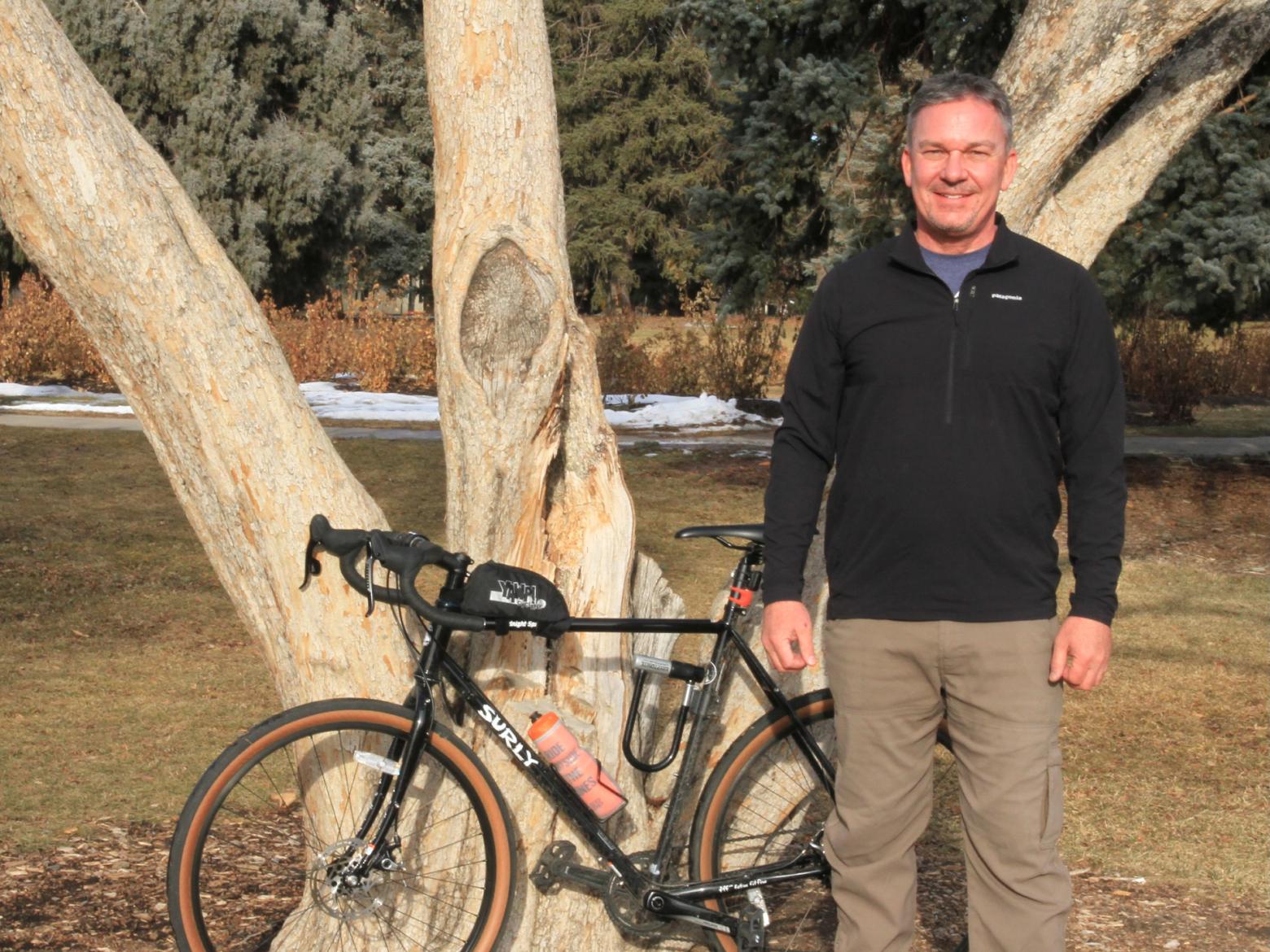

Jeff Gillow PhD '06
Jeff Gillow pursued graduate education at Mines and has built a career applying geochemistry to environmental challenges across water, mining and industrial systems. Having worked as a geochemist and principal technologist, he now serves as Vice President and Critical Minerals Growth Platform Lead at Arcadis, helping advance more sustainable, responsible resource development.
/filters:format(webp)/prod01/mines/media/minesedu/admin-media/program-pages-and-finder/program-finder-photos-/Analytical-Geochemistry-Grad-MP-NT.jpg)
/filters:format(webp)/prod01/mines/media/minesedu/admin-media/program-pages-and-finder/program-finder-photos-/Chemical-and-Biological-Engineering-Grad-MS-NT.jpg)
/filters:format(webp)/prod01/mines/media/minesedu/admin-media/program-pages-and-finder/program-finder-photos-/Environmental-Engineering-Science-Grad-MS-NT.jpg)
Related News
/prod01/mines/media/minesedu/newsroom/images/ColoSchoolOfMines_AdrienneMarshall0478.jpg)
Research & Innovation
Adrienne Marshall wins NSF CAREER Award for study of Western snowpack
/prod01/mines/media/minesedu/newsroom/images/Critical-Minerals-Processing-Researchers.png)
Critical Minerals
Mines metallurgists turning waste into valuable critical minerals
/prod01/mines/media/minesedu/newsroom/images/MME-CAREER-Awards.png)
Research & Innovation